304, 316, duplex, and PH grades — bolts, nuts, studs, and washers stocked to A2 / A4, ASTM F593 / F594, and A193 B8 / B8M. Passivated, pickled, or electropolished, with full MTRs.

Stainless fasteners are what we reach for when the service environment — chloride, acid, moisture, food contact, or temperature — would chew through plated carbon in months instead of decades.
We stock the austenitic workhorses (304 and 316) deep, and source duplex, PH, and A4-80 / A4-100 strain-hardened grades to the callouts your spec actually uses.If your callout doesn't appear below, ask. Most of what's printed on a drawing we've shipped before.
Stainless isn't one material — it's a handful of alloy systems with very different strengths, corrosion behavior, and service limits. Start here and drill into the spec.
General-purpose austenitic stainless. Good corrosion resistance in most atmospheric and mild chemical service, easy to cold-form, non-magnetic in the annealed condition.
Molybdenum addition steps up pitting and crevice resistance in chloride environments. 316L's lower carbon resists sensitization in welded assemblies.
About twice the yield strength of 316 with markedly better chloride SCC resistance. 2507 super-duplex is the move for hot seawater, brine, and aggressive chloride service.
Martensitic PH stainless. Heat-treated to condition (H900, H1025, H1150) for tensile from 135 to 190 ksi. The high-strength option when carbon alloy isn't corrosion-acceptable.
316 stainless cold-worked to property class 80 or 100 (800 / 1000 MPa min tensile). A practical way to get structural-grade strength while keeping 316's corrosion envelope.
Pressure-bolting spec for stainless studs and bolts. B8 is 304, B8M is 316. Class 2 strain-hardened for higher strength at ≤1″ diameter. Standard on flange kits in corrosive process service.
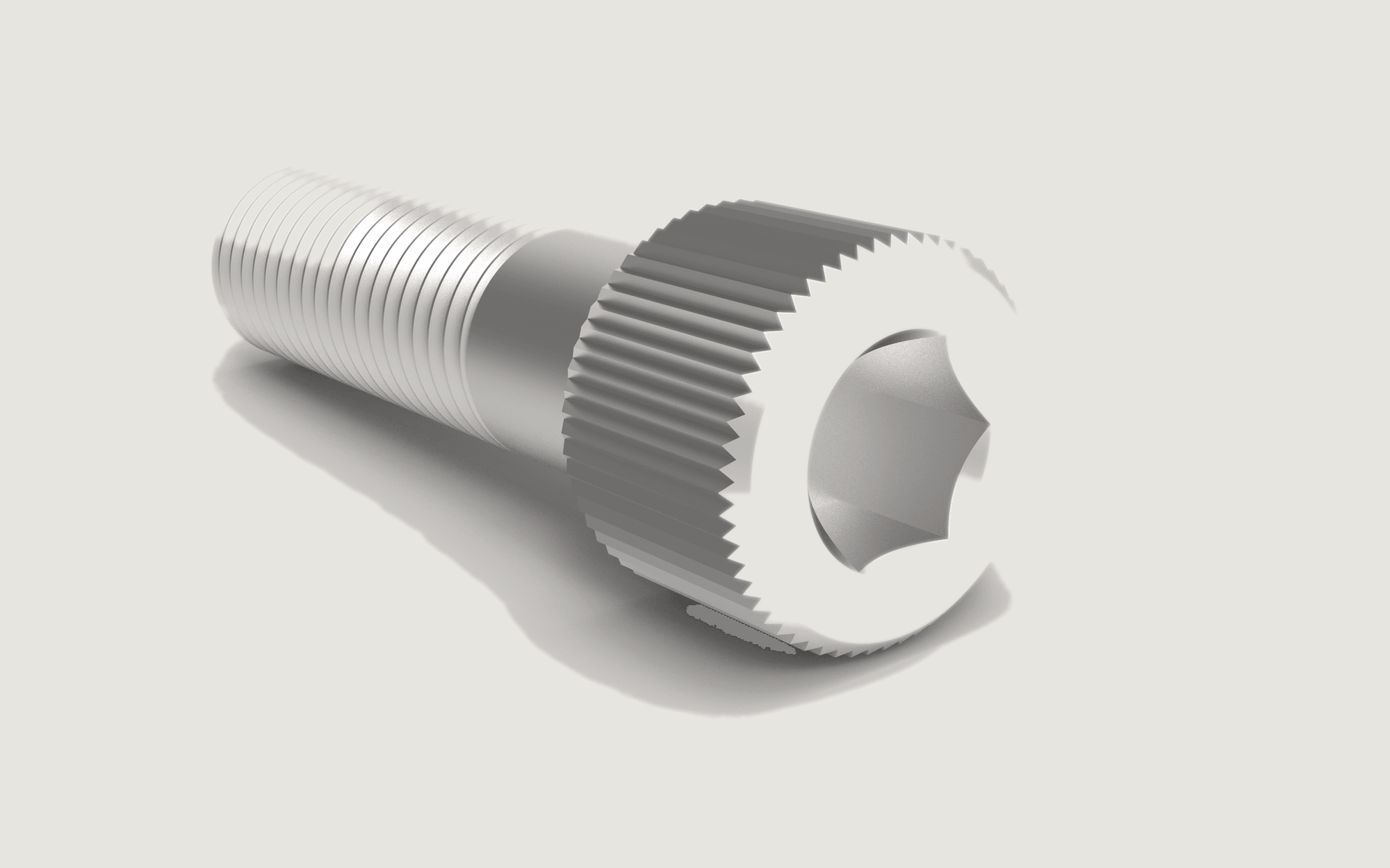
From M3 socket head to 1-1/4″ heavy hex — inch and metric, stocked deep in 304 and 316, sourced in duplex and PH.

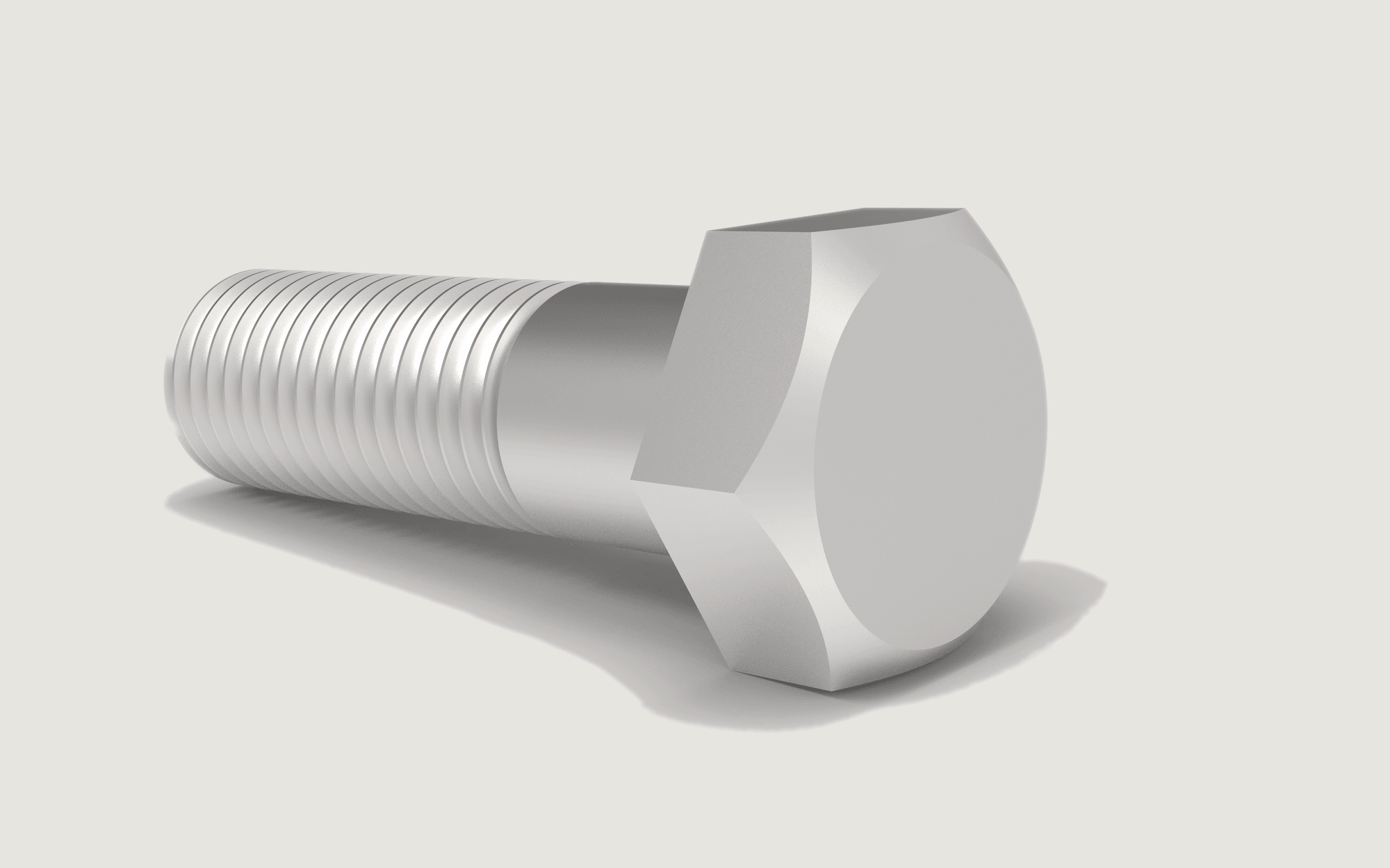
Thicker-pattern hex heads for flanged and high-load joints. Stud bolts cut to length with A194 stainless nuts paired.

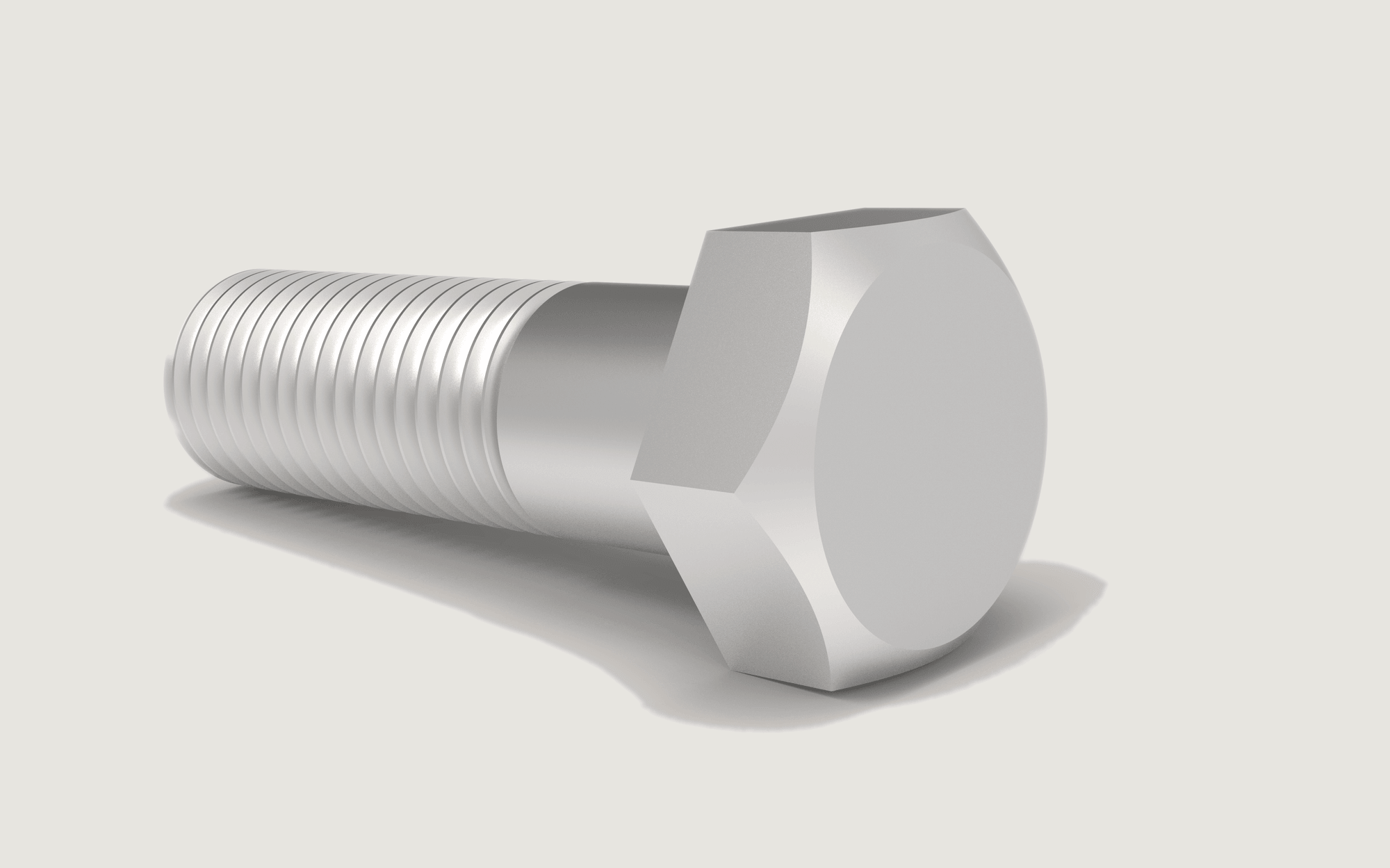
Standard inch-pattern hex cap screws and tap bolts. The general-purpose bolt for non-pressure stainless work.

Precision-fit machine screws for tight head clearance and controlled torque. 18-8 and 316 stainless, inch and metric.

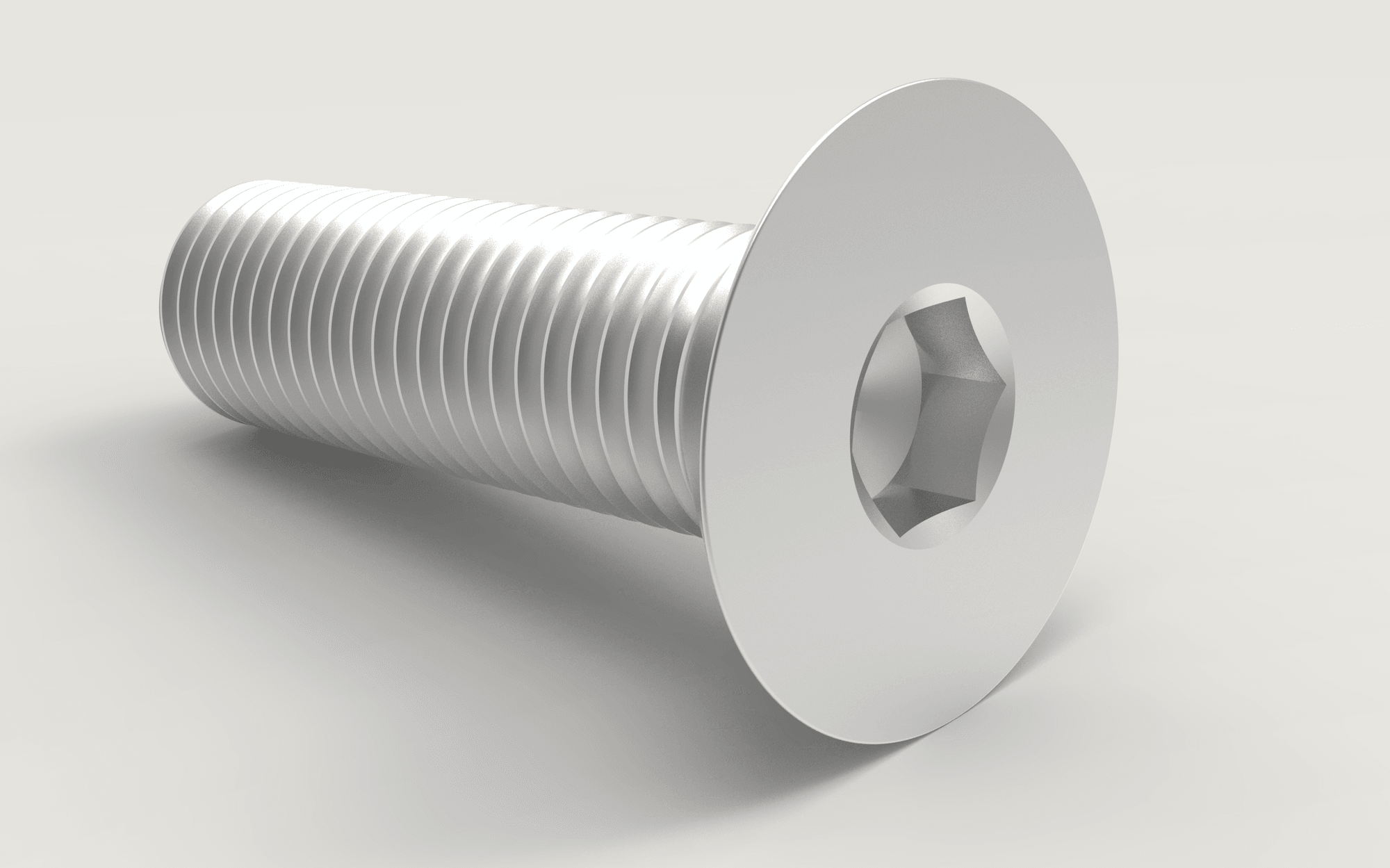
Flush-mount and low-profile architectural and equipment screws. 82° (inch) and 90° (metric) countersinks.

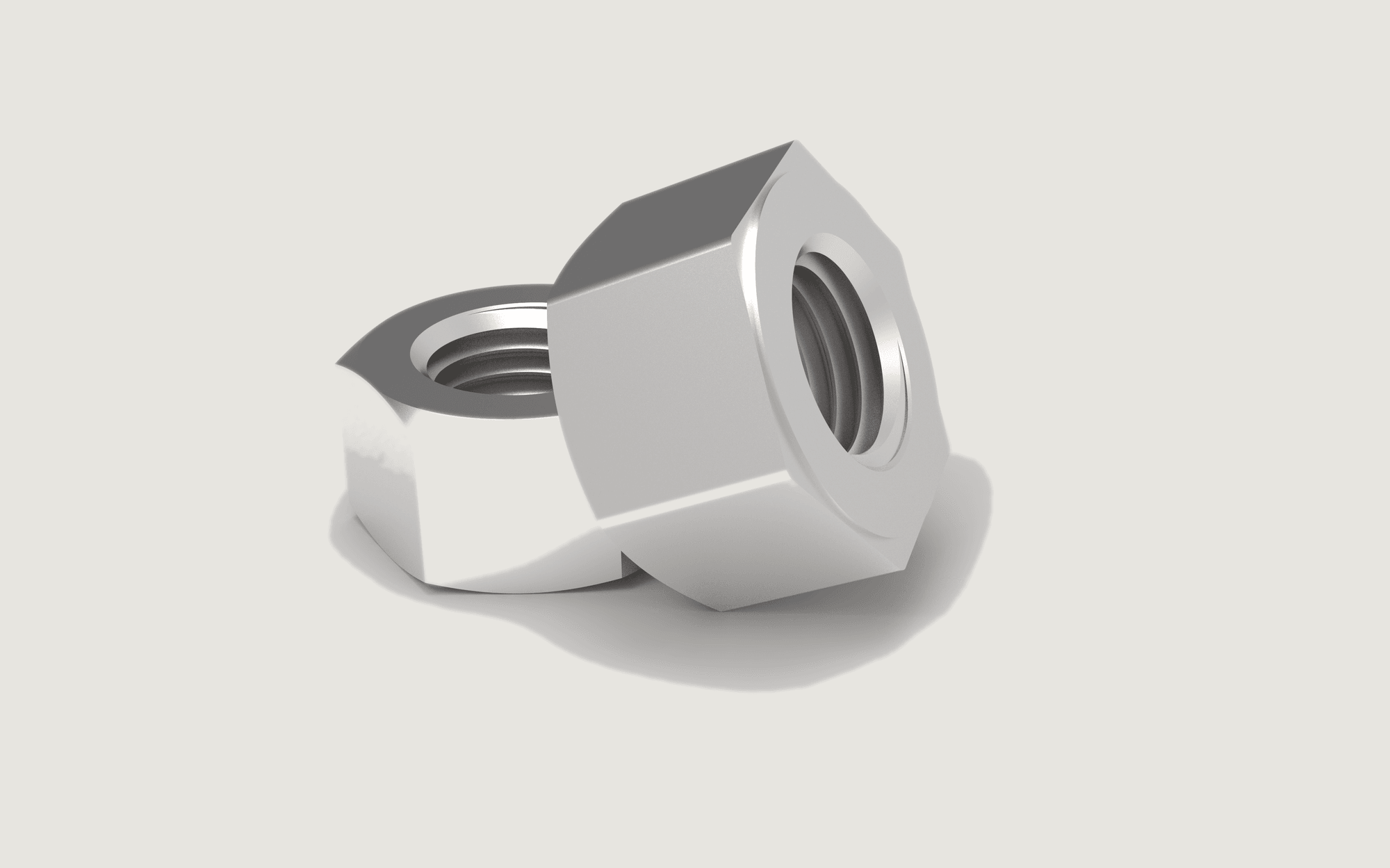
Matched stainless nuts — A194 8 / 8M for pressure service, F594 for non-pressure. Nylon insert lock nuts stocked in 18-8.

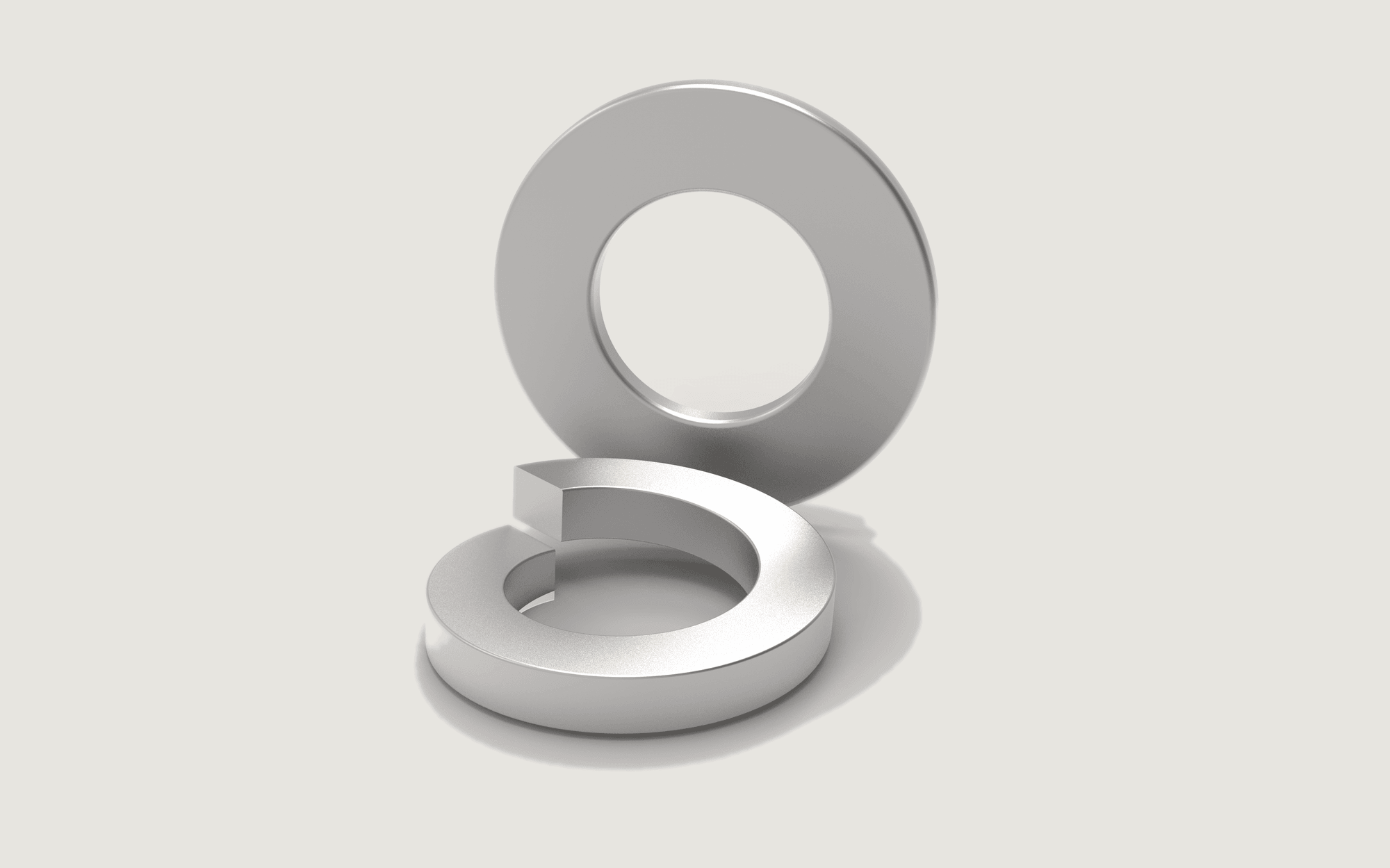
Flat, fender, spring lock, and internal / external tooth — 304 and 316 stainless. Thicker pattern for structural work on request.

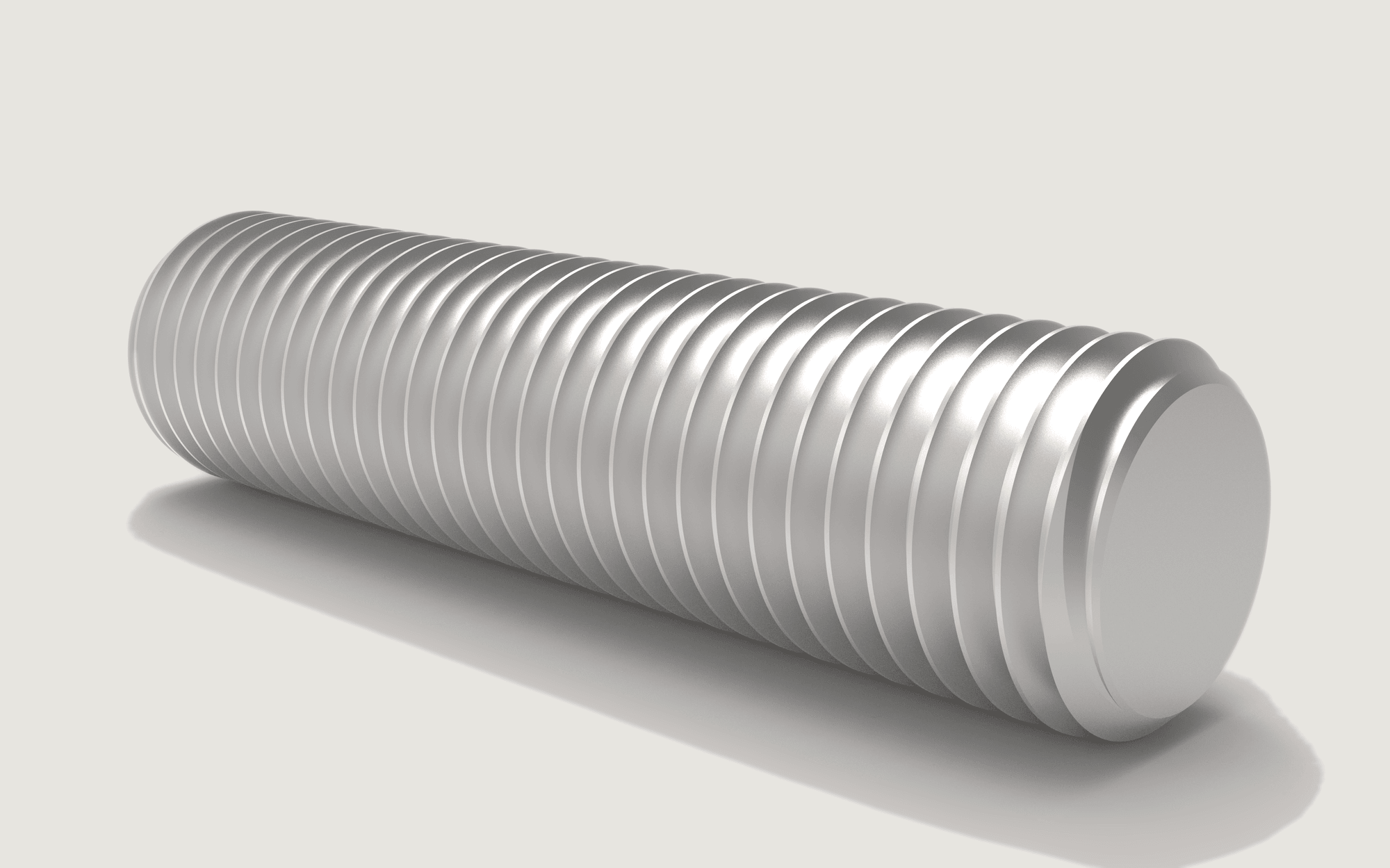
Full-length rod in 3- and 6-ft lengths. Cut-to-length studs, double-end and tap-end, in 304 and 316.

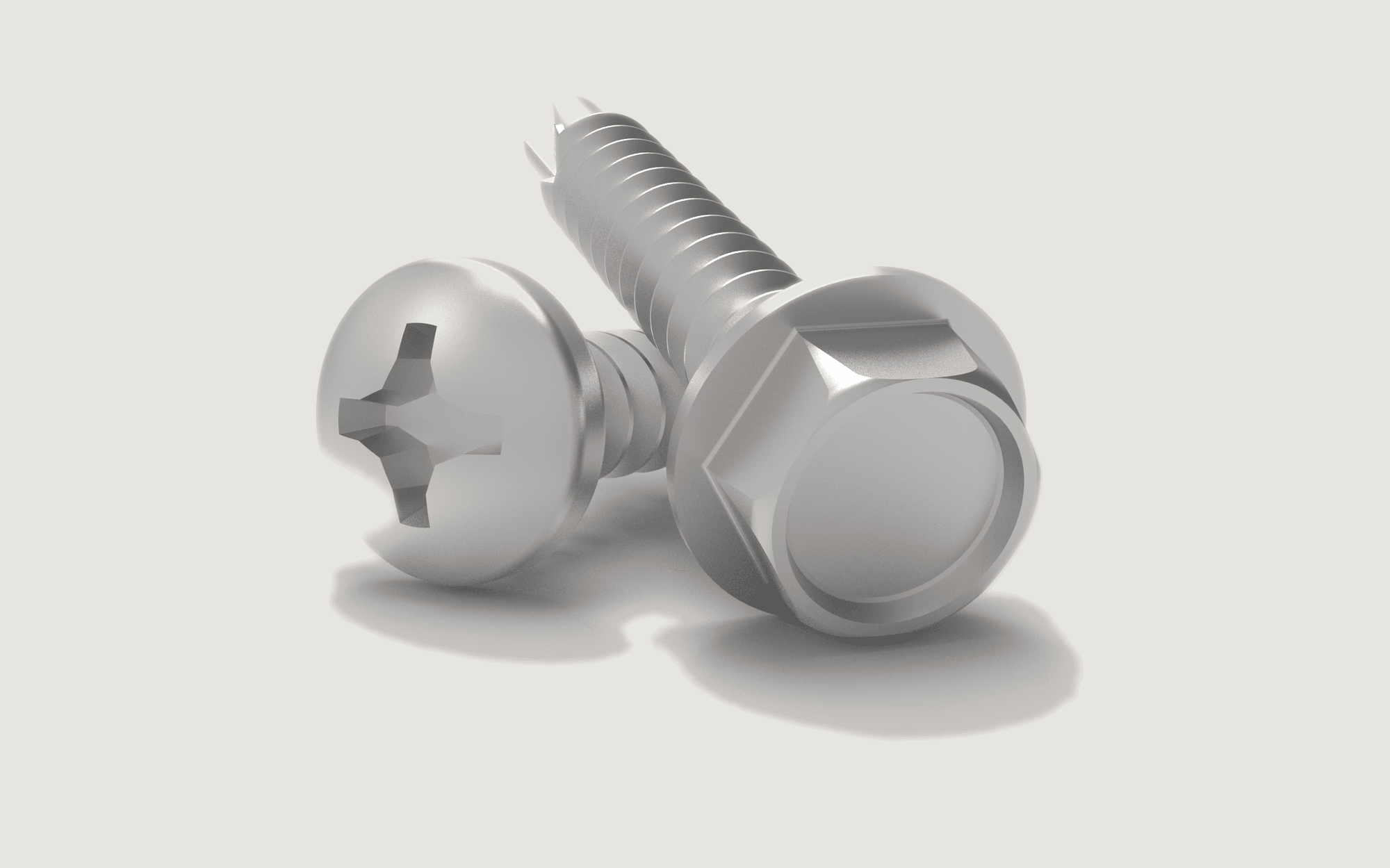
Type A, AB, and 17 self-tappers; machine screws and thread-cutting fasteners for stainless panel and enclosure work.

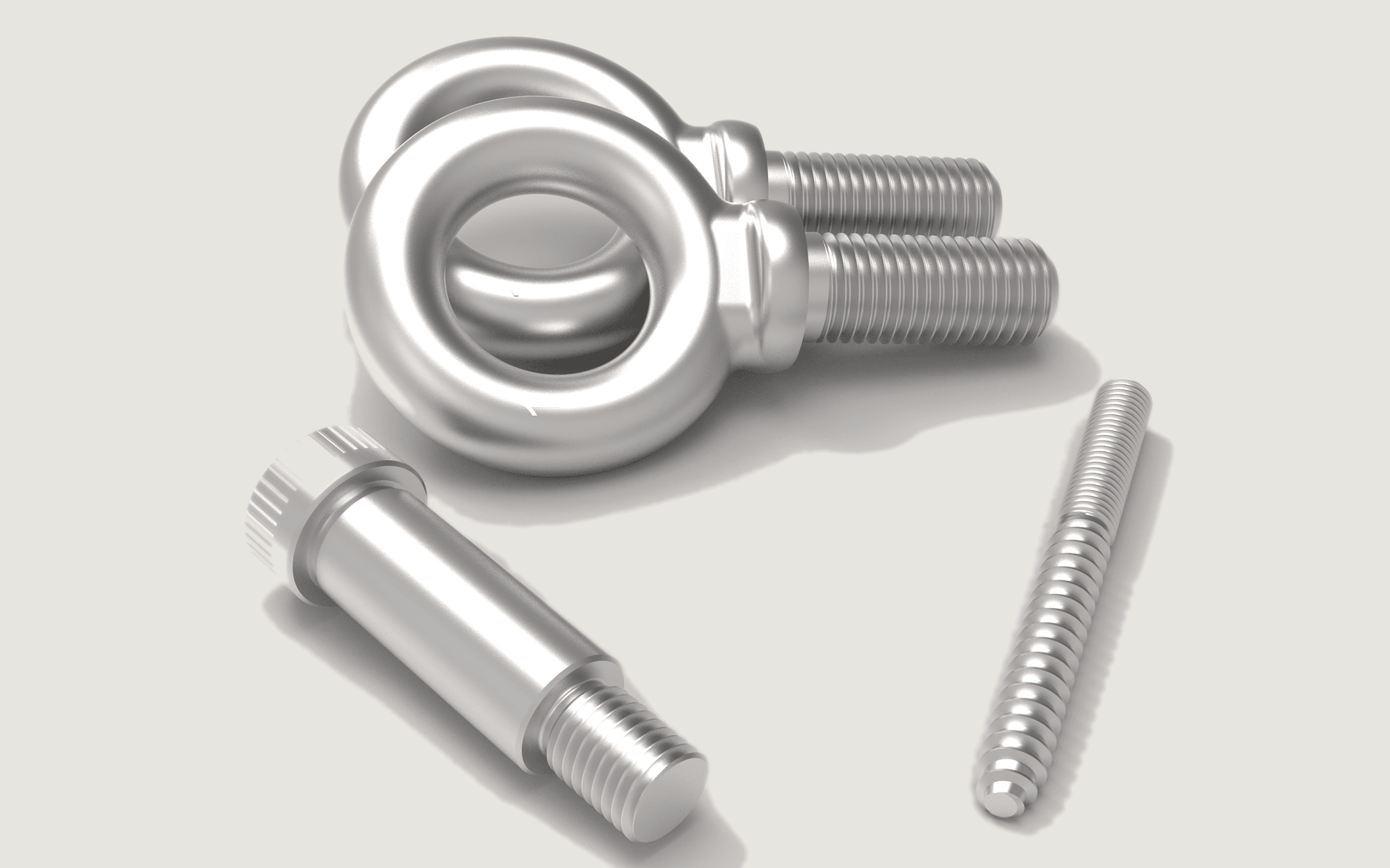
Shoulder bolts, eye bolts, weldless rings, hanger bolts — and anything to print from our CNC shop in 304, 316, or 17-4 PH.
Strength and corrosion trade-offs are real — here's a quick compare of the stainless grades we stock most often. For the full spec sheet on any row, visit the spec library.
| Grade | UNS / ISO | Min. tensile | Corrosion resistance | Temp service | Magnetic | Relative cost |
|---|---|---|---|---|---|---|
| 304 / 18-8F593 Group 1 · A2 | S30400 | 70 ksi | Good | −325° to 800°F | No (annealed) | $ |
| 316 / 316LF593 Group 2 · A4 | S31600 | 70 ksi | Better | −325° to 800°F | No (annealed) | $$ |
| A193 B8 Cl. 1Annealed 304 | S30400 | 75 ksi | Good | −325° to 800°F | No (annealed) | $ |
| A193 B8M Cl. 1Annealed 316 | S31600 | 75 ksi | Better | −325° to 800°F | No (annealed) | $$ |
| A193 B8 Cl. 2Strain-hardened 304 | S30400 | 125 ksi ≤¾″ | Good | −20° to 800°F | Slight (CW) | $$ |
| A193 B8M Cl. 2Strain-hardened 316 | S31600 | 110 ksi ≤¾″ | Better | −20° to 800°F | Slight (CW) | $$ |
| Duplex 2205UNS S32205 · A182 F51 | S32205 | 95 ksi | High | −50° to 600°F | Yes | $$$ |
| Super-duplex 2507UNS S32750 · A182 F53 | S32750 | 116 ksi | Best | −50° to 550°F | Yes | $$$$ |
| 17-4 PH H1025Precipitation-hardening | S17400 | 155 ksi | Good | −100° to 600°F | Yes | $$$ |
| 410 martensiticSelf-tappers, screws | S41000 | 75 ksi | Limited | −20° to 1200°F | Yes | $ |
Stainless isn't finished on the forging line. Surface condition, passivation state, and thread lubrication change how the fastener behaves in service — and whether the joint holds the way the spec promises.
Standard stock ships passivated per ASTM A967. If your project needs more — pickled, electropolished, Molykote-coated, or with a custom stamping — flag it on the RFQ.
Nitric or citric acid passivation per ASTM A967 / AMS 2700 to remove free iron and restore the chromium oxide layer.
For welded assemblies — pickle removes heat tint and the chrome-depleted layer at the weld, then passivation re-establishes the oxide.
Electrochemical surface polish for pharma, food, and high-purity service — reduces surface roughness and improves corrosion behavior.
Stainless galls. We apply Molykote 1000, nickel-based anti-seize, or wax-based coatings to reduce installation torque and prevent seizing.
Grade marking per F593 / A193 with manufacturer identifier. Custom head stamps available on larger orders to your lot-tag program.
Six failure modes are responsible for most of the stainless warranty calls we see. If your joint is at risk for any of them, a quick callout change — or a stop at the quote desk — is cheaper than a retrofit.
Austenitic stainless galls under torque — the mating surfaces cold-weld. Most common on 18-8 fine threads at moderate clamp. Not a corrosion issue; an assembly issue.
304 in coastal air, pool chemistry, or chloride-bearing process fluid pits — especially under gaskets and lap joints where the chromium oxide can't re-form.
Austenitic stainless cracks under sustained tensile stress plus chloride plus temperature (commonly above 140°F). The bolt can pass every visual and snap under load.
Stainless fasteners into mild steel or aluminum structure can drive galvanic corrosion of the base material in wet service — the bolt looks fine, the structure eats around it.
Standard 304 / 316 held at 800°–1500°F (including weld HAZ) precipitates chromium carbides at grain boundaries, locally stripping corrosion resistance.
17-4 in the H900 condition is high-strength but susceptible to hydrogen embrittlement and chloride SCC. Plenty of marine-hardware failures trace back to H900 in saltwater.
Stainless costs more than plated carbon. Here's where the corrosion math says it's worth it — and which grade to reach for.


Every stainless fastener we ship is traceable to heat and lot. Standard with every order; extras available on request — most of what your QA program wants, we've answered before.
MTRs / Mill Test Certificates tied to the heat and lot on every shipment, with chemistry and mechanical properties.
Signed C of C confirming the parts were manufactured and tested to the called-out ASTM / ISO standards.
Positive Material Identification by XRF or OES — per-lot verification that what's in the bag matches the MTR.
First Article Inspection on new programs — dimensional and material verification in one package, sample retention available.
Hardness-controlled bolting for oil & gas service. Available in B8 / B8M, 2205, and 2507 — specify on the RFQ.
Domestic-melt / domestic-pour options for defense work. Longer lead on PH grades — plan accordingly.
A967 or AMS 2700 passivation certification on request, with batch copper-sulfate or salt-spray verification.
Bolt / nut / washer kits shipped together and tagged by heat and lot so your installer never mixes classes.
Stainless isn't the answer to every corrosion problem. If your project lives in one of these neighborhoods, start there.
Stainless callouts can get long — pickled, passivated, electropolished, or hardness-controlled. Paste the line item, attach the drawing, or just describe the service environment.
From a single 316 heavy hex to a full duplex flange package with matched certs — send the drawing and we'll come back with a quote, usually inside 24 hours.